
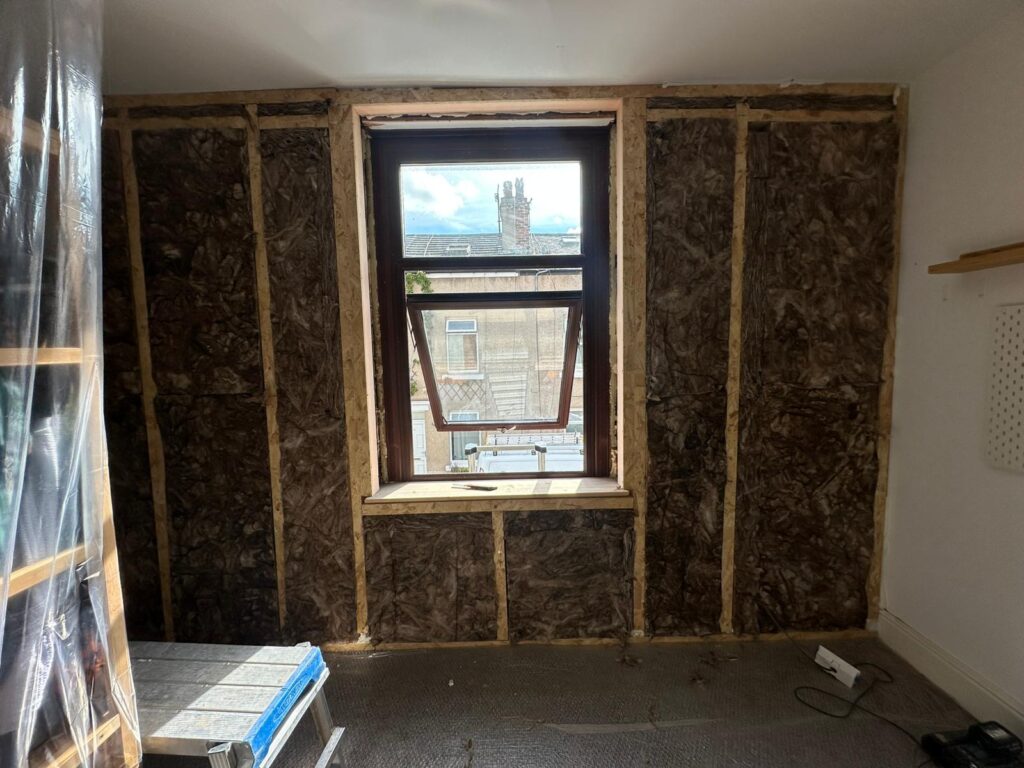
Across Lancaster and Morecambe, many homes have converted loft spaces used as bedrooms, home offices or spare rooms. These “rooms in the roof” are often some of the coldest parts of the house in winter and the warmest in summer.
If your attic room never seems comfortable year-round, the problem is often down to poor or outdated insulation.
Room in roof insulation is designed specifically for these spaces, helping to regulate temperature and reduce heat loss through the roof.
Why attic rooms lose heat so quickly
Unlike standard lofts, attic rooms have sloped ceilings and walls that sit directly against the roof structure. Without proper insulation, heat escapes through these surfaces fast.
In older Lancaster and Morecambe properties, insulation in these areas can be thin, damaged or missing altogether.
You might notice:
- A bedroom that’s freezing in winter
- A room that overheats in summer
- Draughts around the eaves or ceiling
- Higher heating use to keep the space warm
Room in roof insulation targets these problem areas directly.
How room in roof insulation works
Insulation is fitted within the sloping roof sections, dwarf walls and sometimes the flat ceilings. This creates a thermal layer that helps keep warmth inside during winter and reduces heat build-up in summer.
The aim is to turn that attic space into a properly insulated part of the home, rather than an area that’s always at the mercy of outside temperatures.
Why it matters in coastal and rural areas
Homes around Morecambe Bay are exposed to wind, rain and fluctuating temperatures. Roof spaces tend to be the most affected.
Improving insulation in these areas can make a noticeable difference to comfort, especially in top-floor bedrooms where heat loss is greatest.
Is it worth upgrading older insulation?
Many attic conversions done years ago don’t meet modern insulation standards.
Over time, insulation can also shift, compress or become less effective. If your room in the roof still feels uncomfortable despite heating, it may be time for an upgrade.
Bringing insulation up to modern levels can help:
- Keep the room warmer in winter
- Reduce heat loss through the roof
- Make the space more usable year-round
Will it help with energy efficiency?
Yes — roof areas are one of the main places heat escapes. Insulating a room in the roof helps keep more warmth inside the home.
That can mean less reliance on heating, especially during colder months in Lancaster and Morecambe.
While savings vary depending on the property, improved insulation often plays a key role in making homes more energy efficient.
What about space and appearance?
One concern people have is losing space.
A well-designed insulation system keeps this to a minimum. In most cases, the changes are subtle and don’t affect how the room functions day to day.
The goal is to improve comfort without drastically altering the room.
When to consider room in roof insulation
You might want to look into it if:
- Your attic bedroom is always colder than the rest of the house
- Heating bills seem high for the size of the property
- The space is rarely used because it’s uncomfortable
These are all signs that heat is escaping through the roof structure.
Local experience makes a difference
Every roof space is slightly different, especially in older Lancaster and Morecambe homes where conversions were done at different times and to different standards.
A proper assessment helps identify where insulation is missing and what improvements would make the biggest impact.
Wise Energy Solutions has worked with many homes across the area, helping turn uncomfortable attic rooms into warm, usable spaces again. Getting the right advice can make all the difference in deciding whether a room in roof insulation upgrade is the right step for your home.