
Rural Lancashire is beautiful — the Ribble Valley, the Forest of Bowland, the fringes of Pendle and the Trough of Bowland. It’s also home to tens of thousands of properties that have never been connected to the mains gas network and rely on oil boilers to keep the heating on.
If you’re one of those households, the case for switching to an air source heat pump is significantly stronger than it is for most gas-connected homes. Here’s why.
The problem with oil heating
Oil has always had a particular set of problems that gas doesn’t. The price is volatile — it moves with global commodity markets and can spike sharply when supply is disrupted. You need to order it in advance and store it in a tank on your property. And running out because you misjudged your usage or the delivery lorry couldn’t reach you in bad weather is a real and unpleasant possibility.
Over recent years, oil prices have been particularly unpredictable. Households that heat large rural properties on oil have experienced fuel bills that can fluctuate dramatically from one winter to the next.
Beyond cost, older oil boilers are also becoming harder to service as the pool of engineers who work on them shrinks. The industry, like most of the energy sector, is moving.
Why the financial case is stronger for oil households
The government’s Boiler Upgrade Scheme currently offers a £7,500 grant for replacing an oil boiler with an air source heat pump. This grant applies directly to the installation cost — you don’t pay it and wait for reimbursement; the installer deducts it from the bill.
This makes the switch significantly more affordable. A typical air source heat pump installation for a rural property might cost £10,000 to £14,000 fully installed before the grant — and £2,500 to £6,500 after it.
The running cost comparison also tends to favour the switch for oil households. Oil boilers typically achieve around 85–92% efficiency. A heat pump delivers three or more units of heat for every unit of electricity it uses — even in cold conditions. When you compare the cost per unit of useful heat, a heat pump often wins even at current electricity prices, particularly for households that were buying oil at peak prices.
What rural properties need to consider
Not all rural properties are straightforward heat pump candidates, and it’s important to be honest about this. Properties with very high heat demand — large older farmhouses with solid stone walls, minimal loft insulation, and single-glazed windows — will need more careful assessment.
A heat pump can certainly serve a property like this, but it may need to be larger than a standard domestic unit, and the system design needs to account for the higher heat loss. In some cases, fabric improvements (loft insulation, draught sealing) are worth doing alongside the heat pump installation to bring the heat demand into a range where the system runs more efficiently.
Properties with underfloor heating already in place — common in more recently built rural homes and barn conversions — are particularly well-suited. If you have a modern, well-insulated house in a rural setting with underfloor heating, a heat pump is almost certainly the right choice.
What about the hot water?
Rural homes often have larger hot water cylinders than suburban properties — a practical legacy of having space to accommodate them. This actually works in your favour with a heat pump, which heats stored water rather than providing instant hot water like a combi boiler.
Your existing hot water cylinder may well be compatible with a heat pump system. Your installer will check the cylinder volume, insulation, and coil sizing. In many cases it can be retained; in others, a larger or heat-pump-specific cylinder is needed — but it’s not always the high extra cost some assume.
What about LPG properties?
Some rural Lancashire homes use LPG (liquefied petroleum gas) rather than oil — particularly those where a gas-style boiler was preferred but mains gas wasn’t available. LPG has always been expensive relative to mains gas, and the economics of switching to a heat pump are similarly compelling. The BUS grant applies to LPG boiler replacements as well as oil.
Planning and installation considerations for rural sites
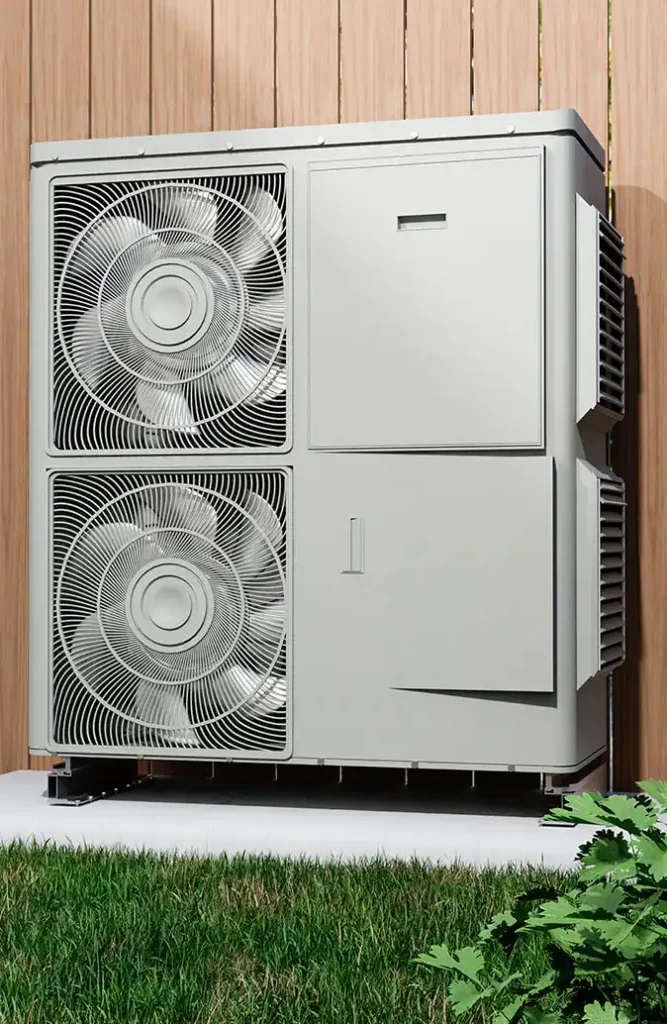
Most rural properties have more outdoor space than suburban homes, which makes siting the heat pump unit straightforward. The one metre boundary rule still applies, but with larger gardens this is rarely a constraint.
Access for the installation team is usually simpler than in dense urban areas, and there are fewer concerns about noise impact on close neighbours. For properties on large plots, ground-mounted heat pump units are also an option if preferred.
Wise Energy Solutions works with off-gas-grid properties across the Ribble Valley, the Fylde hinterland, and rural areas around Pendle and Burnley. We understand the particular requirements of larger rural homes, and we carry out the kind of thorough heat loss assessment that these properties need. We’ll give you an honest picture of what works, what the grant covers, and what your running costs are likely to look like.
📞 On oil or LPG and thinking about switching? Call 01253804151 or visit wiseenergy.co.uk for a no-obligation assessment.