
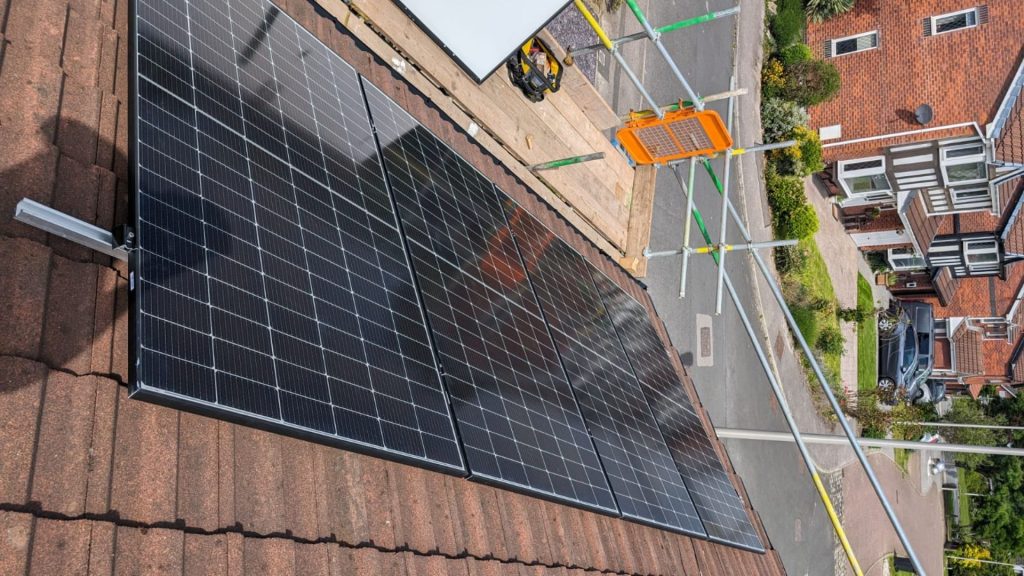
Lancashire isn’t exactly famous for sunshine. So when homeowners in Blackpool, Preston, or Burnley start looking into solar panels, the first question is almost always the same: will they actually work up here?
It’s a fair thing to wonder. And the honest answer might surprise you.
The sunshine myth
Solar panels don’t need direct, blazing sun to generate electricity. They work in daylight — specifically on something called solar irradiance, which is the amount of light energy reaching the panels throughout the day. Even on an overcast Lancashire morning, your panels are still producing.
The UK as a whole receives between 700 and 1,400 hours of usable sunshine per year depending on location. The north west sits comfortably in that range. Blackpool, for example, benefits from its coastal position and relatively open skies. Preston and the Ribble Valley aren’t far behind.
Modern panels are also significantly more efficient than what you’d have seen on rooftops a decade ago. A well-installed system in Lancashire today can generate enough electricity to cover a large chunk of a typical household’s annual energy use — even accounting for grey winter days.
What does a typical system actually save?
This is where things get genuinely interesting. A 4kWp solar system (a common size for a three or four-bedroom home) installed in the north west can generate roughly 3,200 to 3,600 kWh of electricity per year. The average UK household uses around 3,500 kWh annually — so the numbers line up quite well.
Now, you won’t use every unit you generate at the moment it’s produced. Some will be used immediately (reducing your import from the grid), and anything spare gets exported. Under the Smart Export Guarantee (SEG), energy suppliers pay you for that exported electricity — typically between 5p and 15p per unit depending on your tariff.
When you factor in both the savings on your bills and the SEG payments, many households in Lancashire see annual savings of £600 to £1,000 or more. With energy prices where they’ve been in recent years, that return has become much more attractive than it used to be.
What about the upfront cost?
A typical solar installation for a semi-detached or detached home in Blackpool, Preston, or Burnley might cost between £5,000 and £8,000 depending on system size, roof type, and whether you add battery storage.
Payback periods have shortened considerably. Where installers used to quote 15 or 20 years, many homeowners today are looking at payback in 7 to 10 years — sometimes less when they make smart use of the electricity they generate.
Adding a battery means you can store the surplus electricity generated during the day and use it in the evening rather than exporting it. Given that import rates are often five or six times higher than export rates, self-consumption is where the real financial benefit lies.
Does it add value to your home?
Studies consistently show that solar panels add value to residential properties in the UK. Estimates vary, but figures of 4–14% uplift in property value are commonly cited. With house prices in Lancashire at their current levels, that’s a meaningful return — on top of the bill savings.
Estate agents have also noted that homes with solar panels tend to sell faster, particularly as buyers become more energy-conscious and aware of running costs.
Which direction does your roof face?
South-facing is ideal, but don’t write off your home if your main roof slopes east or west. East-west installations can still generate good amounts of electricity — they just spread production more evenly across morning and afternoon rather than peaking at midday. Many modern systems are designed specifically with this in mind.
North-facing roofs are the one to avoid for solar panels, though in many properties the east or west face works perfectly well as an alternative.
Is it the right time to do it?
With energy prices remaining high and panel costs having fallen dramatically over the past decade, the economics of solar have arguably never been better for Lancashire homeowners. Add in the SEG payments, the potential battery benefit, and the property value uplift, and the case is a strong one.
The bigger question is usually whether your home and roof are suitable. That’s something Wise Energy Solutions can assess quickly — we cover Blackpool and the Fylde Coast, Preston and South Ribble, and Burnley and Pendle, and we’ll give you a straight answer about what your roof and usage profile might realistically generate.
Want to know if solar makes sense for your home? Call Wise Energy Solutions on 01253804151or visit wiseenergy.co.uk to book a free assessment.