
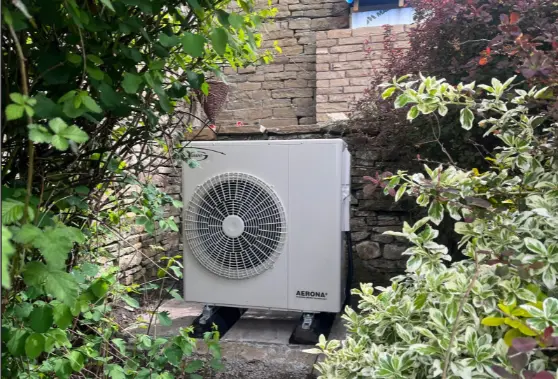
The boiler replacement decision used to be simple. Your old one stopped working, you called a Gas Safe engineer, a new Worcester Bosch went in, and that was that. Now there are more options, more opinions, and — it has to be said — more misinformation circulating than ever.
If you’re facing a boiler decision in the next year or two, here’s a straightforward look at how heat pumps and gas boilers actually compare for homes in Blackpool, Preston, Burnley, and across the region.
What They Have in Common
Both heat your home and your hot water. Both connect to your existing radiator circuit (though potentially with some modifications for a heat pump). Both can be controlled via smart thermostats. Both need servicing annually.
That’s roughly where the similarities end.
How They Differ
Fuel source. A gas boiler burns natural gas. An air source heat pump runs on electricity and extracts additional heat from the air outside.
Flow temperature. A gas boiler heats water to around 70–80°C before it circulates through your radiators. A heat pump typically works at 35–55°C. This lower temperature is more efficient, but it means your radiators need more surface area to deliver the same amount of heat into your rooms.
Carbon footprint. Gas is a fossil fuel. Electricity’s carbon intensity depends on the grid mix, but it’s been falling steadily as renewable generation increases. A heat pump’s carbon footprint is already lower than a gas boiler for most UK households, and it’s set to improve as the grid continues to decarbonise.
Running costs. Currently complicated. Electricity costs more per unit than gas, which offsets some of the efficiency advantage heat pumps have. The Coefficient of Performance (how many units of heat you get per unit of electricity) varies by system and property, but 3:1 or 4:1 is typical. At current tariffs, running costs are broadly comparable for a well-matched installation — but this depends significantly on your home’s insulation and the heat pump being properly sized.
Upfront cost. A heat pump costs more to install than a gas boiler. The Boiler Upgrade Scheme grant of £7,500 closes the gap considerably, but it doesn’t fully eliminate it.
When a Heat Pump Makes Sense
A heat pump is worth serious consideration if:
- Your home is reasonably well-insulated (or you’re planning insulation improvements)
- You also have, or are considering, solar panels
- You’re replacing a boiler that’s reached end of life anyway
- You have larger radiators or underfloor heating (or you’re willing to upgrade)
- You’re planning to stay in your property for ten or more years
- You’re interested in reducing your home’s carbon footprint
The combination of heat pump plus solar panels is particularly compelling. If you’re generating your own electricity, the higher electrical demand of a heat pump becomes far less of a financial concern.
When a Gas Boiler Still Makes Sense
There’s no point pretending otherwise — for some homes, a like-for-like gas boiler replacement is still the right choice right now.
If your property is a solid Victorian terrace in Burnley or Blackpool with single-skin walls and limited insulation, installing a heat pump without addressing those issues first would result in higher running costs and a less comfortable home. In that scenario, improving the insulation envelope first — and then looking at a heat pump as the next step — is the more sensible sequence.
If your budget doesn’t stretch to the upfront cost even with the grant, that’s a legitimate constraint.
And if your boiler has just failed and you need heating back on today, sometimes the practical decision is a like-for-like replacement, knowing you’ll look at alternatives when more planning is possible.
The Hybrid Option
There’s a middle path that doesn’t always get mentioned: a hybrid heat pump system, which pairs a heat pump with a small gas boiler as a backup. The heat pump handles most of the heating load efficiently, and the gas boiler kicks in during the coldest periods or when demand peaks.
For some properties — particularly older, larger ones that aren’t quite ready for a full heat pump installation — this can be a sensible transitional solution. It’s not the right answer for everyone, but it’s worth knowing it exists.
What Does the Future Look Like?
The government’s trajectory points towards phasing out new gas boiler installations — the current target is 2035 for new installations in existing properties, though the exact timeline has shifted and may shift again.
What that means practically is that anyone buying a gas boiler today is buying a technology that will eventually need to be replaced by something else. That’s not a reason to panic — a well-maintained boiler lasts 15 years or more — but it’s worth factoring into a longer-term view of your home.
Getting the Right Answer for Your Home
The heat pump vs. gas boiler question doesn’t have a single right answer. It depends on your property, your budget, your plans, and your priorities. What it absolutely requires is an honest assessment of your specific situation rather than a one-size-fits-all recommendation.
Wise Energy Solutions carries out full property assessments before recommending any heating solution. If a heat pump isn’t right for your home at this point, we’ll tell you. If it is — and increasingly, for well-insulated properties across Preston, South Ribble, and the Fylde Coast, it makes excellent sense — we’ll give you a clear picture of what to expect.
Get in touch for a survey and an honest conversation about what works best for you.