
Heat pumps have gone from a niche technology that most people had never heard of to something you’ll find mentioned in almost every conversation about home energy upgrades.
The government’s pushing them. Manufacturers are scaling up. And installers are busier than ever.
But there’s a lot of noise around the subject, and plenty of misconceptions. Here’s a straightforward look at what an air source heat pump actually does, whether it suits your home, and what to expect if you go ahead with one.
How Do They Work?
An air source heat pump extracts heat from the outdoor air — even in cold weather — and uses it to heat your home and hot water. It works a bit like a fridge in reverse: rather than removing heat from inside and dumping it outside, it pulls heat from outside and brings it in.
The bit that surprises people is that they work when it’s cold. Modern heat pumps operate efficiently down to temperatures of -15°C or below. Given that winters across Blackpool, Preston, and Burnley rarely see sustained temperatures anywhere near that cold, they’re well-suited to our climate.
They run on electricity, and they produce more heat energy than the electrical energy they consume — typically three to four units of heat for every one unit of electricity. That ratio is called the Coefficient of Performance (COP), and it’s the key efficiency metric to understand.
Is Your Home Suitable?
This is where honesty matters. Heat pumps work best in well-insulated homes because they deliver heat at a lower flow temperature than a gas boiler. A poorly insulated property can still have a heat pump installed, but you’ll either need to upgrade your insulation first, upsize your radiators, or accept higher running costs.
A good installer will carry out a heat loss calculation for your property. This tells you exactly how much heat your home needs on the coldest days, and helps size the heat pump correctly. At Wise Energy Solutions, this is standard practice — getting the sizing right is fundamental to how well the system performs.
Older properties are often a concern for homeowners in areas like Burnley, Pendle, and parts of Preston, where Victorian and Edwardian terrace housing is common. The honest answer is that they can work, but they need more careful assessment. Some older homes will need insulation improvements first.
Underfloor Heating vs Radiators
Heat pumps pair beautifully with underfloor heating because the large surface area distributes heat efficiently at low flow temperatures. If you’re doing a renovation or building an extension, it’s worth seriously considering.
For existing homes with radiators, you have two options: run the heat pump at higher flow temperatures (which reduces efficiency somewhat) or upgrade the radiators to larger ones that work well at lower temperatures. Neither is a dealbreaker — it’s about finding the right balance for your home.
Running Costs and the Electricity Price Problem
Here’s what complicates the heat pump picture: electricity costs significantly more per unit than gas. A heat pump’s efficiency advantage helps offset that, but it doesn’t fully eliminate the gap for every household.
For many homes, particularly those with good insulation, running costs are comparable to those of a modern gas boiler, or slightly lower. For homes that need more work before installation, it’s less clear-cut. This is why proper assessment matters — anyone promising you dramatic savings without first looking at your home should be treated with caution.
The longer-term argument for heat pumps is about grid decarbonisation. As more renewable energy comes onto the grid, the carbon footprint of electricity decreases, which makes heat pumps increasingly compelling from an environmental standpoint. And if you pair a heat pump with solar panels, you’re generating your own electricity to run it, which is where the economics become genuinely attractive.
The Boiler Upgrade Scheme
Government support is currently available through the Boiler Upgrade Scheme, which offers a £7,500 grant towards the cost of installing an air source heat pump. This brings the upfront cost down considerably and is worth factoring in.
Wise Energy Solutions can advise on eligibility and handle the application process. It’s not complicated, but the scheme has specific requirements that need to be met.
What Does Installation Involve?
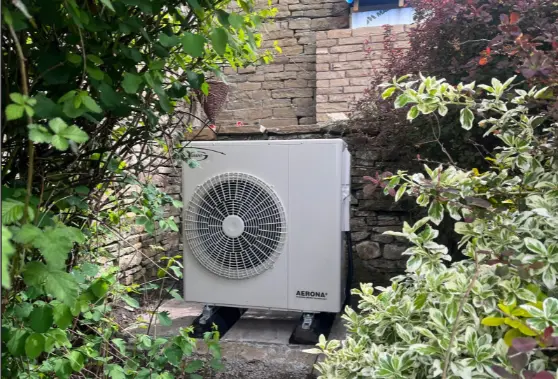
The outdoor unit — roughly the size of a large air conditioning unit — sits outside your property. Inside, a cylinder stores hot water, and the heat pump connects to your existing heating system. Installation typically takes two to three days for a standard property.
You’ll need a bit of accessible outdoor space, though not a huge amount. Most properties across the Fylde Coast and South Ribble have enough room without it being an issue.
Worth Exploring?
If your boiler is ageing and you’re facing a replacement decision, a heat pump is genuinely worth considering rather than automatically replacing like-for-like. The technology has matured significantly, government support is meaningful, and the long-term trajectory of energy prices and grid carbon intensity points toward electrification.
Get in touch with Wise Energy Solutions for an honest assessment of whether it makes sense for your specific property. There’s no obligation, and a proper conversation will give you a much clearer picture than any general article can.