
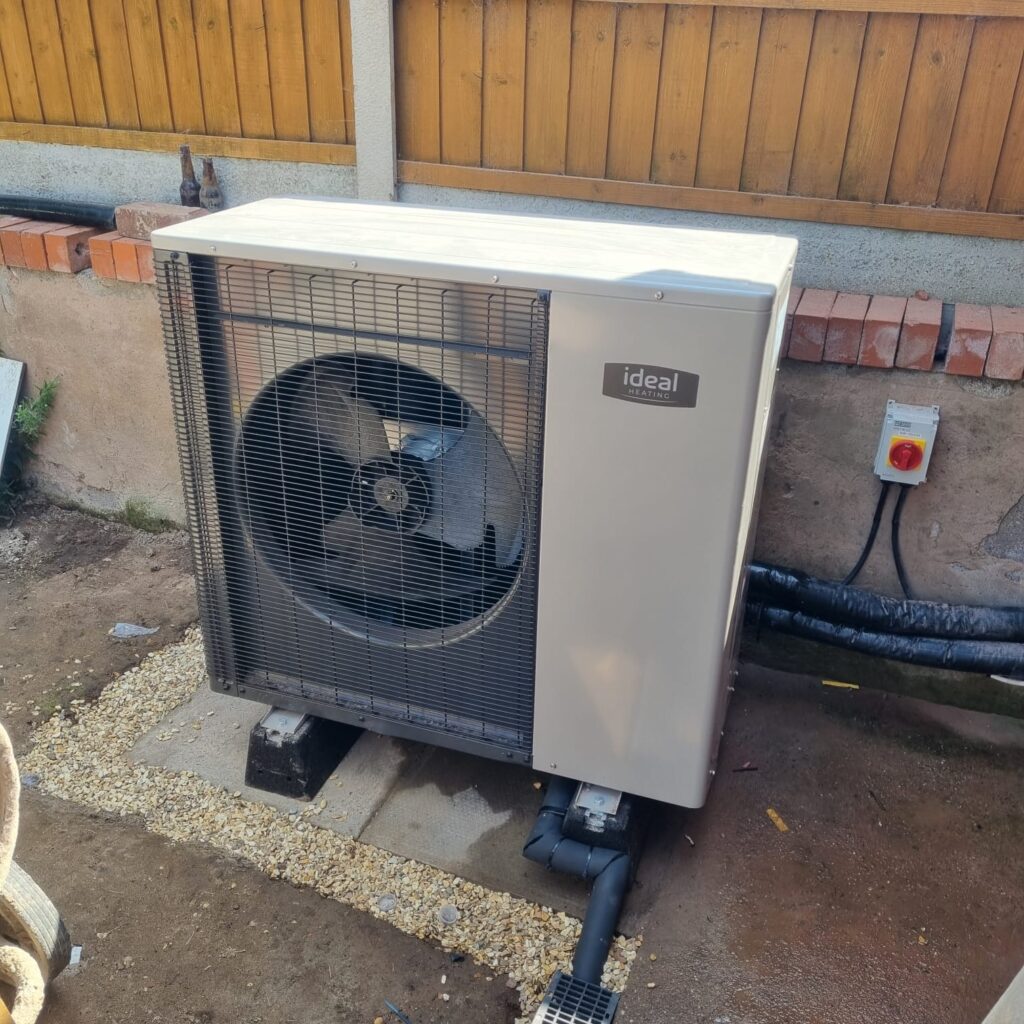
If you’ve been looking into ways to cut your heating bills or reduce your home’s reliance on gas, you’ll almost certainly have come across air source heat pumps. They’re talked about a lot right now — and for good reason.
But the explanations you tend to find online are either overly technical or suspiciously vague. So here’s a plain-English version, focused on what you actually need to know as a homeowner in Lancashire.
What does an air source heat pump actually do?
It extracts heat from the outside air and uses it to warm your home and your hot water. That’s the core of it.
The bit that surprises most people is that it can do this even when it’s cold outside. Heat pumps are designed to work efficiently down to around -15°C or even lower in some models. A grey January morning in Blackpool is no problem at all.
The technology works on the same principle as a fridge, just in reverse. A fridge takes heat from inside and dumps it out the back. A heat pump takes heat from outside air and moves it into your home.
How efficient are they?
This is where heat pumps are genuinely impressive. A gas boiler converts fuel into heat at around 85–95% efficiency — you put in one unit of energy and get less than one unit of heat out.
A heat pump works differently. It moves heat rather than creating it. For every unit of electricity it uses, a well-installed heat pump can deliver three or four units of heat. This ratio is called the Coefficient of Performance (COP), and a COP of 3 or 4 is typical for a quality air source unit in UK conditions.
That means even though electricity costs more per unit than gas, the efficiency gap means your actual running costs can be comparable — and often lower when the system is properly specified and your home is well insulated.
What does installation involve?
The outdoor unit looks a bit like an air conditioning unit and sits outside your home — typically on a wall or on the ground beside your property. It doesn’t need planning permission in most cases, as it’s treated similarly to a satellite dish under permitted development rules.
Inside, the heat pump connects to your existing radiators or underfloor heating. In many cases, existing radiators can be kept — though sometimes larger radiators are needed to work well with the lower flow temperatures that heat pumps use. Your installer should assess this as part of any quote.
You’ll also need a hot water cylinder if you don’t already have one, as heat pumps heat stored water rather than heating on demand the way a combi boiler does.
Installation typically takes two to three days and causes minimal disruption.
What’s the Boiler Upgrade Scheme?
The UK government currently offers a £7,500 grant through the Boiler Upgrade Scheme (BUS) for homeowners replacing a gas or oil boiler with an air source heat pump. This grant is applied directly to the installation cost — you don’t pay upfront and wait for a rebate.
This has made heat pumps significantly more affordable for many households, and it’s worth checking eligibility early when you’re researching options. Not every property or boiler type qualifies, but most Lancashire homes will be eligible.
Are they suitable for older houses?
This is probably the most common concern, and it’s a reasonable one. Heat pumps work best in homes that retain heat well because they’re designed to run at lower temperatures for longer periods rather than blasting hot air in short bursts, as a boiler does.
That said, plenty of older properties in Blackpool, Preston, and Burnley have been successfully converted. The key is to have a proper survey done before installation — a good installer will assess your insulation, window glazing, and existing heating layout to tell you honestly whether a heat pump will work well for your home as is, or whether some improvements would help first.
Underfloor heating is ideal for heat pumps, but not essential. Modern heat pumps can work efficiently with radiators, particularly if oversized slightly.
Running costs — the real picture
Heat pump running costs depend on your electricity tariff, your homeis insulation, and how the system is configured. On a standard electricity tariff, running costs for a heat pump are broadly comparable to a gas boiler for many households. On a time-of-use tariff (where you pay less for electricity overnight), costs can be noticeably lower.
Pairing a heat pump with solar panels is increasingly popular — and makes a lot of sense. The solar generates cheap electricity during the day, which the heat pump uses to heat your water and top up thermal storage. It’s a combination that can dramatically reduce your energy bills and carbon footprint simultaneously.
Is it the right choice for your home?
Not every home is the right fit for a heat pump right now — and a reputable installer will tell you that honestly. But for a large proportion of Lancashire homes, particularly detached and semi-detached properties with gas or oil heating, a heat pump is a viable option that offers genuine long-term savings.
Wise Energy Solutions covers Blackpool and the Fylde Coast, Preston and South Ribble, and Burnley and Pendle. We do honest, no-obligation assessments and we’ll give you a clear picture of what a heat pump could mean for your specific home.
Ready to find out if a heat pump is right for you? Call 01253 804151 or visit wiseenergy.co.uk to arrange a free home assessment.