
Wall insulation is one of the single most effective things you can do to improve your home’s energy efficiency. But not all homes are the same — and the right type of wall insulation depends on how your property was built. Here’s a plain-English guide to help you work out which option suits your home in Lancashire.
First: Does Your Home Have a Cavity Wall or a Solid Wall?
The type of insulation you need depends entirely on your wall construction. Most homes built after the 1920s have cavity walls — two layers of brick with a gap (the cavity) between them. Older properties, and many pre-1920s terraces common across Burnley and Pendle, typically have solid walls — a single thick layer of brick or stone with no gap.
Not sure which you have? A quick check: look at the bricks on your exterior wall. If they all face the same direction (long edge outward), you likely have a cavity wall. If you see alternating bricks (some turned sideways), it’s probably solid. Our team can confirm this during a free home survey.
Cavity Wall Insulation: How It Works
Cavity wall insulation involves filling the gap between your two wall layers with insulating material — typically mineral wool, polystyrene beads, or foam. Small holes are drilled in the outside of your wall, the insulation is injected, and the holes are filled and sealed. It’s a relatively quick process, causes minimal disruption, and is one of the most cost-effective upgrades available to eligible homeowners.
Internal Wall Insulation: How It Works
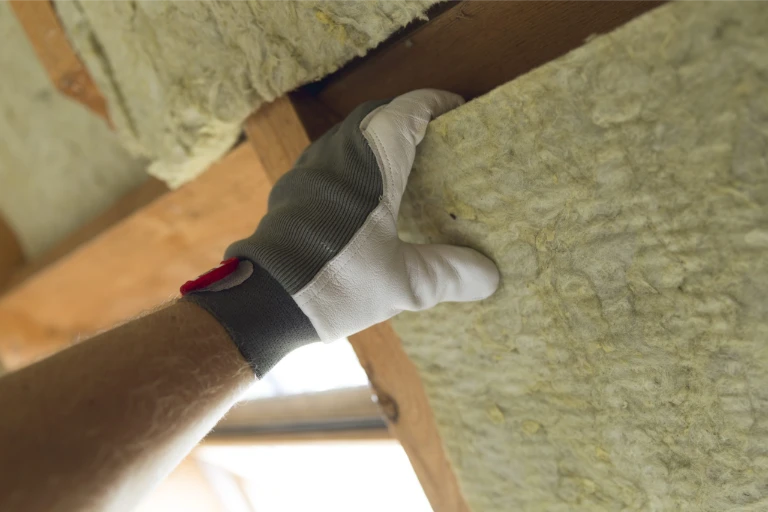
Internal wall insulation (IWI) is typically used on solid-walled homes where there’s no cavity to fill. It involves fitting rigid insulation boards or a stud wall filled with insulating material on the inside surface of your external walls. The walls are then re-plastered and finished, leaving your home looking exactly as it should — just significantly warmer.
IWI can also be used in cavity wall homes where the cavity has already been filled, or where external cladding isn’t possible (for example, on homes in conservation areas).
Which Lancashire homes benefit most?
Older stone terraces in Burnley and Pendle — many of which were built before cavity walls became standard — are prime candidates for internal wall insulation. These homes can lose enormous amounts of heat through uninsulated stone walls, and IWI can transform both comfort and running costs.
Comparing the Two Options
Cavity Wall Insulation — Best for:
Homes built after the 1920s with an unfilled cavity. Relatively low-cost, fast installation, no interior changes, and often eligible for grant funding through ECO4 or the Great British Insulation Scheme.
Internal Wall Insulation — Best for:
Older solid-walled homes, properties in conservation areas, and homes where external insulation isn’t suitable. Higher investment, but often the only option for pre-1920 properties — and the savings can be substantial.
What About External Wall Insulation?
There’s a third option — external wall insulation (EWI) — which involves cladding the outside of your home with an insulating layer. We’ve focused on internal options in this article, but if you’d like to know whether EWI could work for your property, our team is happy to advise.
Are There Grants Available?
Yes. Both cavity wall insulation and internal wall insulation can be funded (fully or partially) through government energy efficiency schemes, depending on your household income, benefits status, and your property’s current EPC rating. Wise Energy Solutions works directly with these schemes and can help you access funding you might not even know you’re entitled to.
- LA Flex — local authority flexible eligibility (available in Lancashire)
Not sure which insulation your home needs?
We’ll carry out a free survey and tell you exactly what’s possible — 01253 804151